Not a Graveyard: The Climate-Controlled Unit Quietly Curating Your Collection

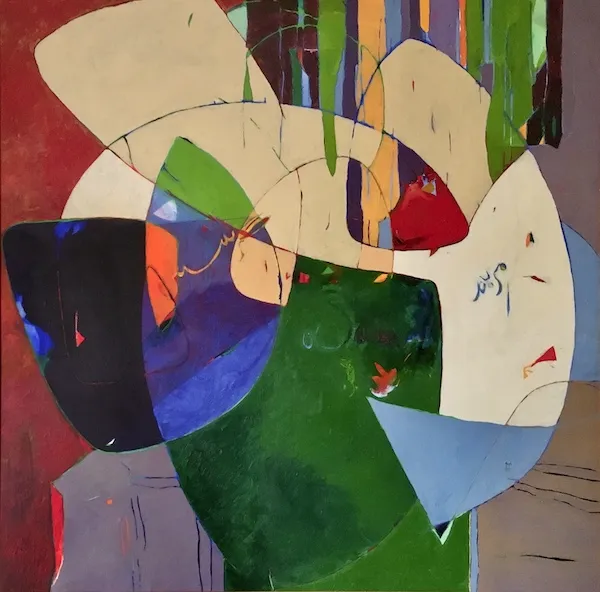
Photo: Unknown, CC0, via Wikimedia Commons
Somewhere in a facility off the interstate outside Columbus, a 10-by-10 unit holds thirty-odd paintings, four of which are currently on a wall in a house eleven miles away. The rest are waiting their turn. Nothing in that unit is forgotten, exactly. It's scheduled.
That's the shift worth paying attention to. For a long time, self-storage was where a collection went to become a story you told at parties — "oh, most of it's in storage." Today a growing number of collectors treat the unit as a second gallery with terrible hours and excellent humidity control, swapping work in and out of the house on a rhythm rather than dumping overflow and closing the door.
The Wall Runs Out First
Most collectors hit the ceiling somewhere around thirty to forty framed works. Hallways absorb a dozen. The staircase, another handful. Then come the leaners behind the sofa, the closet, the garage, and finally the unit.
The difference between a hoard and an annex is administrative, and it's not complicated: a list, a schedule, and photographs. If you can't say what's in the unit without driving there, it isn't an annex. It's a mystery.
What Climate Control Actually Buys You
The phrase gets used loosely. Real climate control means temperature stability in the mid-sixties to low seventies and relative humidity held in the 45 to 55 percent band, with filtration and continuous monitoring. Air conditioning alone is not climate control, which matters a great deal in Phoenix, Atlanta, and any market where a summer humidity spike can bloom a canvas.
Ask for the twelve-month data logs. Reputable facilities produce them without a fuss. What you're looking for isn't a perfect curve — it's the absence of cliffs.
The Cost, Roughly
A small climate-controlled unit commonly runs somewhere in the low hundreds per month in secondary markets and considerably more in New York, Los Angeles, San Francisco, and Chicago. Add racking or shelving, moving costs both ways, and an insurance rider. Compare that against a single bad reframe or a dehumidified closet with a door that never quite closes, and the math often favors the unit — provided you're actually using it.
The Rotation Calendar
Collectors who do this well tend to swap two to four times a year, and the schedule usually follows one of three logics. Light: works on paper get three-to-four-month turns on any wall receiving daylight. Season: heavier, darker pieces in winter; brighter, airier work in summer. Occasion: a dinner, a visitor, a loan to a local nonprofit for a fundraiser.
Whatever the logic, the habit is the same. Photograph the work before it leaves the house and after it arrives at the unit. Note the wall it was on, the date, and any change — a fresh scuff on a frame, a canvas that's gone slightly slack. The back of a piece tells you more history than the front ever will.
Conservation Rules That Actually Matter in a Unit
- Nothing on the floor. Slotted racks or shelving, always. Canvas corners are the first thing to go.
- Don't stack flat. Weight on a canvas over months is how stretcher bars become a memory.
- Be careful what touches the surface. Bubble wrap against paint or varnish can leave texture and trap condensation. Use silicone-release tissue or Tyvek at contact points.
- Keep an air gap. Concrete floors and exterior walls sweat. Six inches of clearance is cheap insurance.
- Silica isn't a humidity system. It buffers small swings. It does not fix a facility with a roof problem.
Then there's the part no one can control: access. Quarterly visits catch pests, mold blooms, a leaking unit above yours, and the slow realization that something on your list isn't where the list says it is.
The Insurance Question Nobody Asks
Homeowner policies commonly cap or exclude property kept off-premises, and "storage" is a word adjusters like to underline. A fine art floater should follow the work wherever it lives, including a rented unit. Document condition at intake with dated photographs, confirm whether mysterious disappearance is covered, and tell your insurer the unit exists — before you need to.
A Small Museum With One Trustee
Run well, the unit becomes something quietly valuable: an annex where work rests, rotates, and occasionally travels to a charity exhibition or a friend's new apartment. Label things. Keep a checklist. Lend a piece or two when a local space asks, so the collection keeps moving through the world instead of sitting in the dark.
The wall will run out again. It always does. The collectors who plan for it end up with something better than storage — they end up with a collection that keeps showing itself.