Five Years After Graduation: The Messy True Story of Becoming an Artist
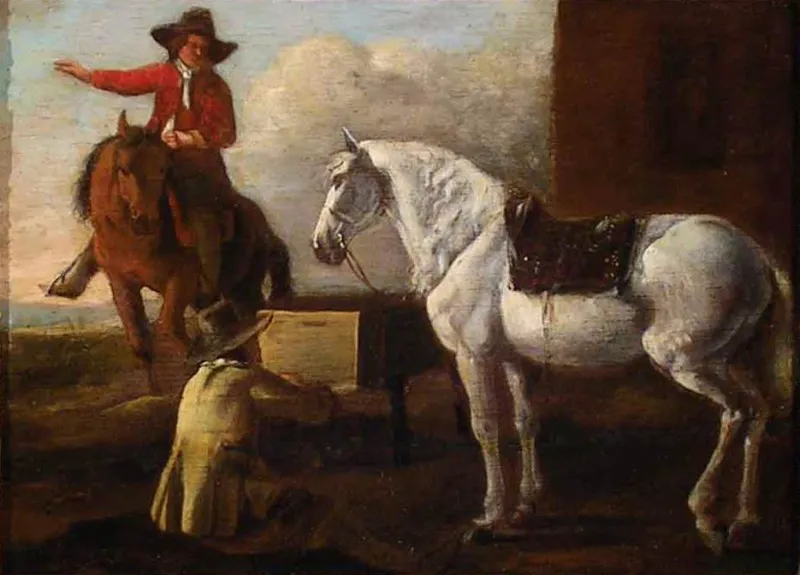
Photo: Abraham van Calraet, Public domain, via Wikimedia Commons
Here's what the graduation announcement doesn't include: the part where the freshly minted MFA moves into a shared apartment, takes a job framing pictures at a custom shop, and spends two years hearing nothing from galleries at all.
The mythology of the American art career is built on outliers — the star who gets scooped up at the thesis show, the one whose first New York solo makes a magazine cover. But for the overwhelming majority of artists, the first five years after school look nothing like that. They look like persistence, badly paid and rarely photographed. So we decided to map what those years actually contain, based on conversations with artists at various points along the road, the dealers who eventually said yes, and a few collectors who got there first.
Year One: The Crash
The consistent report from almost every artist we spoke with: the year after graduation is a kind of withdrawal. School provides structure — critiques, deadlines, a community that sees your work weekly. Graduation deletes all of it at once.
"I didn't make anything serious for eight months," one painter, four years out of a program in the Midwest, told me. "I felt like a fraud. The whole identity of 'artist' was tied to being a student, and suddenly I was just a person with a diploma and a storage unit full of canvases."
The practical survival kit, in most tellings: a day job with some flexibility (art handling, teaching, freelance fabrication, or something entirely unrelated), a shared studio, and the discipline to keep showing up without an audience. The artists who make it past year one are rarely the most talented. They're the ones who kept working when nobody was watching.
Years Two and Three: The Rejection Economy
Then comes the application grind, and it is more brutal than most civilians realize. Residencies, open calls, grant applications, gallery submissions — many artists describe sending out dozens of packets a year and hearing nothing. A rejection rate north of ninety percent is normal, even for artists whose work is, objectively, very good.
The galleries, for their part, describe a numbers problem of their own. A mid-size gallery in a secondary market might receive hundreds of unsolicited portfolios a year and have room for maybe one new artist. Most of those portfolios get a glance, not a review.
Which is why the real openings tend to come sideways: a curator sees a piece in a group show at a nonprofit space. A fellow artist recommends you for a two-person exhibition. A residency director makes a call. The formal application system matters, but the informal network matters more — and that network gets built precisely through the unglamorous stuff: going to other artists' openings, being generous in studios, showing up.
The Early Bet: Where Collectors Fit In
Here's the part of the story that rarely gets told: the first serious collector is often more important than the first gallery.
Before dealers commit to an artist, they want evidence that someone else believes. A single collector who buys two or three pieces over a couple of years — who visits the studio, lends work to a show, mentions the artist to a curator — functions as a proof of concept. Several gallerists admitted that a credible early collector's name in an artist's file moves the portfolio up the pile.
And the collectors who do this? They're usually not moguls. They're teachers, nurses, engineers — people with modest budgets and genuine conviction who buy work at prices a recent grad can actually charge. "I bought a small painting from a young artist for $900," one collector in Philadelphia told me. "Three years later that artist had a gallery. Do I feel smart? Sure. But mostly I just liked the painting and wanted to help."
Years Four and Five: The Slow Yes
By the back half of the first five years, the picture starts to clarify — not with a bang but with a series of small confirmations. A juried show. A residency acceptance. A gallery that takes a meeting. For most artists who stick it out, the breakthrough is a cumulative thing, less a door opening than a hallway of slightly ajar ones.
The artists we spoke with who've crossed into professional practice describe the same feeling: the work didn't change as much as the infrastructure around it did. The day job became part-time, then occasional. The studio became a real room with a door.
What This Means If You Love Art
If you're a collector — or might become one — the takeaway is simple and a little thrilling: the first five years are exactly when your support matters most. A $500 to $2,000 purchase from an unrepresented artist isn't a gamble on a future auction record. It's fuel. It buys materials, time, and, honestly, morale.
And if you're simply an art lover, it's worth knowing what you're looking at when you see early work in a nonprofit space or a group show. Behind nearly every artist whose name you'll eventually recognize, there were five years of day jobs, ignored applications, and one or two people who decided, early and without much evidence, that the work was worth believing in.
The talent was always there. What it needed was time — and somebody willing to bet on it before the market did.