Waiting Room Walls: How Hospital Hallways Became the Busiest Galleries in America

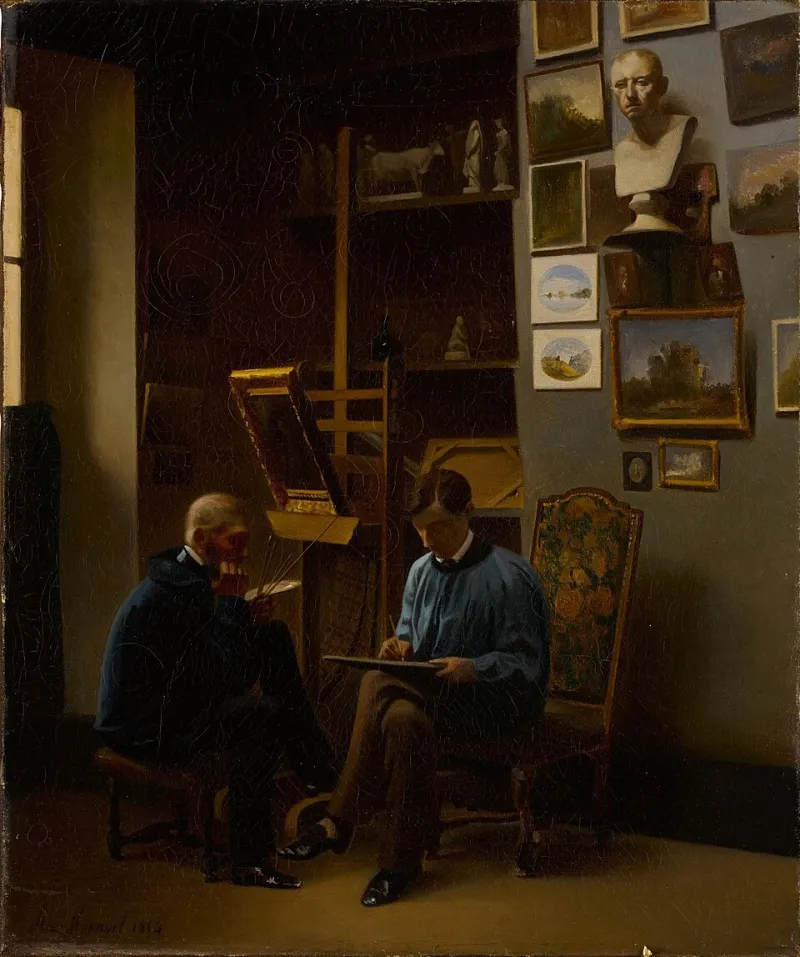
Photo: Andre Carrotflower, CC BY-SA 4.0, via Wikimedia Commons
There's a museum in Cleveland that never charges admission, never closes for holidays, and logged more visits last year than the city's art museum sees in five. You've probably been inside one. So has your insurance company. It's a hospital.
While the art world debates attendance numbers and blockbuster loans, healing-arts programs at American hospitals have been quietly assembling collections that would make a regional museum blush. Cleveland Clinic alone holds thousands of works. Kaiser Permanente, Mass General, the Mayo Clinic — each curates a rotating stable of artists with acquisition budgets that, in some markets, rival anything the local gallery scene can offer. And unlike that Chelsea opening nobody attended, these walls get foot traffic. Reluctant, anxious, IV-dragging foot traffic, but foot traffic all the same.
The Curator You've Never Heard Of
Meet the person behind the wall. Healing-arts curators are a small, dedicated profession — part registrar, part facilities negotiator, part therapist-adjacent diplomat. Their job isn't to provoke. It's to hold a terrified family's attention for the ninety seconds it takes to reach the elevator, and to make those ninety seconds a little less punishing.
That constraint produces a fascinating aesthetic. Forget the irony-heavy, conceptually dense work that dominates biennials. Hospital collections skew toward landscape, abstraction with breathing room, color that behaves. Curators talk about "wayfinding art" — pieces that help you orient in a disorienting building — and about avoiding anything with red (it reads as alarm) or mirrors (nobody wants to meet their own face at 6 a.m. before a biopsy).
It sounds like a limitation. Many artists describe it as a brief.
The Career Boost Nobody Brags About
Here's the part the art press rarely covers: a hospital commission can change an artist's year. These aren't vanity purchases. Programs frequently acquire in volume — dozens of works at a time — often directly from studios at fair prices, with prompt payment and no consignment games. For a mid-career painter priced out of the gallery shuffle, a single healthcare contract can outearn a season of exhibitions.
Ask around any regional studio scene and you'll find it: the sculptor whose steel forms now greet patients at a cancer center in Denver, the printmaker in Minneapolis whose series was licensed for three floors of a children's hospital. Few put it on their CV front and center. Some worry it reads as commercial. Others will tell you, flatly, that it's the most meaningful sale they've ever made — and the only one where strangers write to say the work mattered.
Should Critics Care?
The uncomfortable question: does art designed to soothe deserve serious attention? The skeptical view is that healing-arts programs produce a kind of ambient visual chamomile — competent, inoffensive, and critically inert. The art historian's instinct is to flinch at anything selected for its calming effect.
But spend a day walking these corridors and the picture complicates. The best programs aren't buying pablum. They're commissioning ambitious, sometimes genuinely challenging work — site-specific pieces, large-scale installations, artists with serious gallery resumes — and asking a question museums rarely pose so bluntly: what does art actually do to a person who isn't prepared for it?
There's no velvet rope, no wall text, no expectation. Patients encounter the work in the most unguarded state a viewer can occupy. Some curators argue this makes hospitals the purest viewing environment in America. Critics, mostly, haven't shown up to test the theory.
Your Next Gallery Crawl Might Have a Gift Shop
For collectors, there's a practical takeaway. Hospital programs are among the most reliable regional buyers in the country, and the artists they acquire — vetted by committees, durable by requirement, tested daily against millions of stressed viewers — represent a strange but effective filter. Work that can hold up in a hallway full of grief, boredom, and fluorescent light has passed a stress test no art fair can replicate.
The next time someone tells you Americans don't look at art, mention the corridor on the fourth floor. Chances are, more people stood in front of it this week than ever queued for a Vermeer.