Painting the Sky You Actually See: How Bespoke Commissions Became America's First Art Purchase
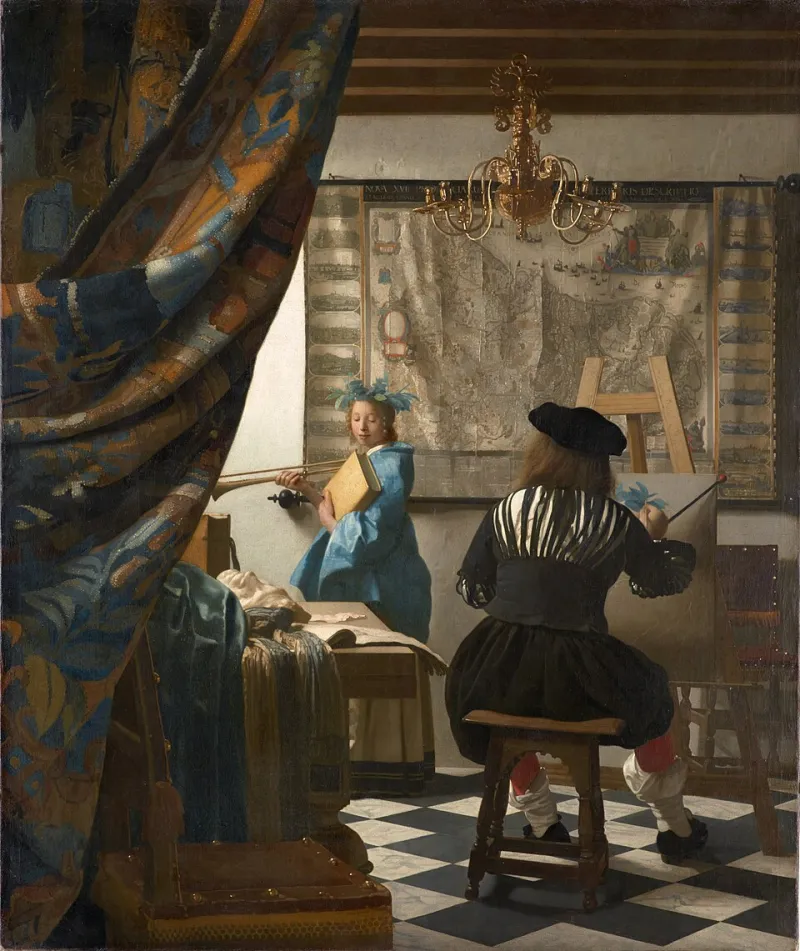
Photo: Johannes Vermeer, Public domain, via Wikimedia Commons
There's a painting hanging in a colonial in West Hartford right now that no gallery will ever show. It depicts a November morning on a cul-de-sac in suburban Ohio — the buyer's childhood street, rendered in the muted grays and yellows of a Midwest winter. The collector has never met the artist. The artist has never seen the street in person. And yet the transaction that put the painting on that wall may be the most significant thing happening in American art collecting right now.
Commissions aren't new. Patronage built the Renaissance, and portrait painters kept food on the table for centuries. What's new is the scale, the accessibility, and the fact that for a growing number of Americans, a commissioned piece is the first original artwork they'll ever own. No gallery visit. No art fair. Just a DM, a deposit, and a four-month wait.
The Skyline Economy
Ask around and a pattern emerges quickly. People don't commission abstractions or conceptual work. They commission their lives: the skyline from their apartment window, the peonies from their wedding bouquet, the lake house that's been in the family since 1974. It's memory as subject matter, and it's booming.
Part of this is Instagram's doing. Artists post finished commissions, followers recognize their own cities and memories in the work, and the pipeline fills itself. A painter in Asheville told me she hasn't applied to a gallery in three years — she stopped taking new commission requests last spring because the waitlist hit fourteen months.
Three Artists, Zero Gallery Representation
Consider the range of people making this work. There's the former sign painter in Albuquerque who now does large-scale neighborhood portraits at $3,500 a pop, booked solid through next summer. There's a botanical watercolorist in Philadelphia who built her entire practice on wedding flowers — brides send the bouquet photos, she paints them at twice the size, and the waiting list renews itself with every June. And there's a young oil painter in Detroit whose childhood-home commissions have become something of a phenomenon among first-generation homeowners, people who bought the house their parents could never afford and want to mark the occasion.
None of them have gallery representation. None of them want it, at least not right now. The math is simple: a gallery takes fifty percent and controls the relationship. A commission takes zero percent and comes with a client who cries when they open the crate.
The Awkward Part: Creative Control
Every commission artist has a story about the client who wanted revisions that bordered on painting it themselves. The general rule among the professionals: two rounds of sketches, then the artist takes over. Contracts are getting more sophisticated, too — kill fees, revision limits, and clear language about whether the artist can show the work afterward (most can, a few buyers pay a premium for privacy).
The intimacy cuts both ways. These artists spend weeks inside someone else's memory. One told me she knows more about her clients' marriages than her friends'. Another said he's painted the same deceased golden retriever four separate times for four separate siblings.
What It Means for the Market
Here's where it gets interesting for collectors and the industry watching them. Commission buyers are learning to buy art the way they'd buy anything else made by hand — by relationship, by trust, by price transparency. They're not learning the gallery script, the booth etiquette, the dance of not looking too interested. They're skipping all of it.
Whether that pipeline eventually flows back into traditional collecting is the open question. Some commission clients graduate to buying finished work from the same artists. Others are content with a house full of paintings of their own life and no interest in anything else. Either way, the artists winning right now are the ones who figured out that the most compelling subject in American art might just be the view from the buyer's own window.