The Other Full-Time Job: What It Takes to Love a Working Artist
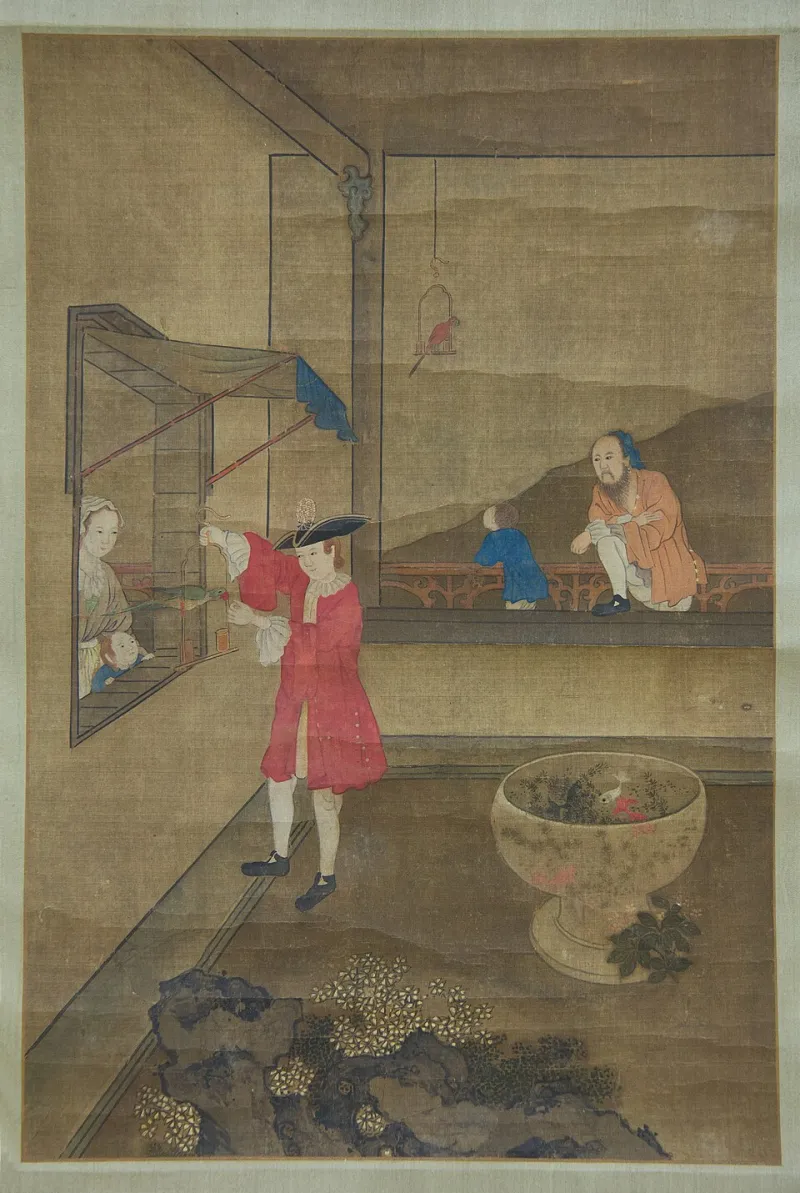
Photo: anonymous , Public domain, via Wikimedia Commons
Ask someone to picture an emerging artist's life and they'll imagine the studio: the paint-flecked floor, the coffee cups, the radio going. What they won't picture is the kitchen table two rooms away, where a spreadsheet is open and someone who does not make art is doing the math.
That someone is usually a spouse. And in the American art world's long romance with the struggling-artist narrative, the partner has mostly been a stage direction — mentioned, never interviewed. So we called a few of them. What follows is less a portrait of sacrifice than a working arrangement, negotiated in real time, with real money and real feelings on the table.
The Bank of the Marriage
Let's start with the part everyone knows and nobody says out loud: for most emerging artists, the household carries two incomes and one career.
Dana, a nurse practitioner in Columbus, Ohio, has been married to a painter for nine years. "The first five, I thought of it as lending him money," she says. "Now I think of it as we're both investing, but only one of us picked the asset." She laughs when she says it, but the spreadsheet on her laptop — visible over the video call — suggests she's only half joking.
The numbers are blunt. Paint, canvas, and framing for a serious painting practice can run several hundred dollars a month before a single piece sells. Studio rent in mid-size cities like Pittsburgh or Kansas City might run $200 to $500 a month — cheap by New York standards, still real money on a teacher's salary. Sales, when they come, are lumpy: nothing for six months, then a small gallery show that clears $4,000, most of which immediately becomes the next body of work.
Several spouses described a system rather than a sentiment. Separate accounts. A household budget the artist's income gets added to, not counted on. One spouse in Minneapolis, a public-school teacher, described their arrangement as "a family business where one partner keeps the day job." Nobody in these marriages talks about subsidy. They talk about runway.
Opening Night Is a Shift, Not a Party
Ask the spouses what they actually do, and the answers sound less like romance and more like logistics.
They drive the van on delivery day. They hold the level while the work goes up. They stand at the gallery door during the opening, redirecting guests to the good paintings and away from the ones the dealer couldn't place. They remember which collector's name goes with which red dot. One spouse in Santa Fe described memorizing prices "because Marcus freezes when anyone asks, and then he discounts it."
There's an emotional labor component too, and it's heavier than it sounds. Rejection letters arrive at a steady clip — residency denials, grant rejections, the gallery that stopped returning emails. The spouse is often the first responder. "I've gotten very good at not saying the word 'real job,'" Dana says. "Even in a fight. Especially in a fight."
And then there's the opening itself, which for the artist is a professional event and for the partner is unpaid event staff. Several described a familiar rhythm: arrive an hour early, hang the last piece the artist re-stretched that afternoon, make small talk for three hours, drive home, listen to the full debrief — the dealer's comment, the critic who left early, the collector who almost — and then go to work the next morning.
When the Spouse Becomes the Studio
Here's where the story turns, because in a surprising number of households, the arrangement stops being one-directional. The partner gets pulled in.
It starts small. Stretching canvases because the artist's hands are wrecked. Photographing work because the spouse, it turns out, has a better eye for it. Managing the newsletter because somebody has to and the artist would rather eat glass. Within a few years, many spouses are functionally running the back office of a small creative business — invoicing, inventory, the Instagram account the artist refuses to post on.
For some, it goes further into genuine collaboration. One spouse in Philadelphia, a former bookkeeper, now negotiates all of her husband's gallery terms. "I read the consignment contract he signed for three years without reading," she says. "Then I read the next one. They were not the same." She's not wrong: consignment agreements, commission splits, and shipping responsibilities are where emerging artists most often lose money, and a partner who reads contracts is worth more than any grant.
Others describe something closer to artistic influence. A spouse who's a woodworker builds the frames. A spouse who's a graphic designer does the catalog. The line between support and co-creation gets blurry, and a few spouses admitted to complicated feelings when the work that includes their labor gets reviewed as one person's vision.
The Terms of the Deal
What struck us most in these conversations was how unsentimental the spouses were. None of them described themselves as patrons. They described themselves as partners in a bet — one they made knowingly, with terms they revisit.
The most common term: milestones. Many households have an unspoken (or very spoken) agreement that the artist will reassess at a certain point — five years out of school, age forty, after the third unsuccessful round of gallery approaches. Sometimes the milestone passes and the practice shifts: teaching, commercial work, a more marketable direction. Sometimes it doesn't, and the marriage absorbs it.
The second term: respect for the work. Nearly every spouse said some version of the same thing — they don't have to love the paintings, but they refuse to treat the practice as a hobby. "I've never once called it his 'little art thing,'" says Dana. "That's the deal. I get a partner who's broke and interesting. He gets a wife who asks about the show like it's a real show. Because it is."
Maybe that's the real story. The romantic myth says artists need to suffer alone. The spouses we talked to have built something more practical and more durable: a two-person operation where one person makes the work and the other makes it possible — and both know exactly which is which, more or less, most of the time.
The next time you're at an opening and you see someone patiently holding a wine glass, standing slightly apart, keeping an eye on the door — say hello. That's probably the gallery's most important employee.